Category: Design Inspirations

Design inspirations and products

Pool House

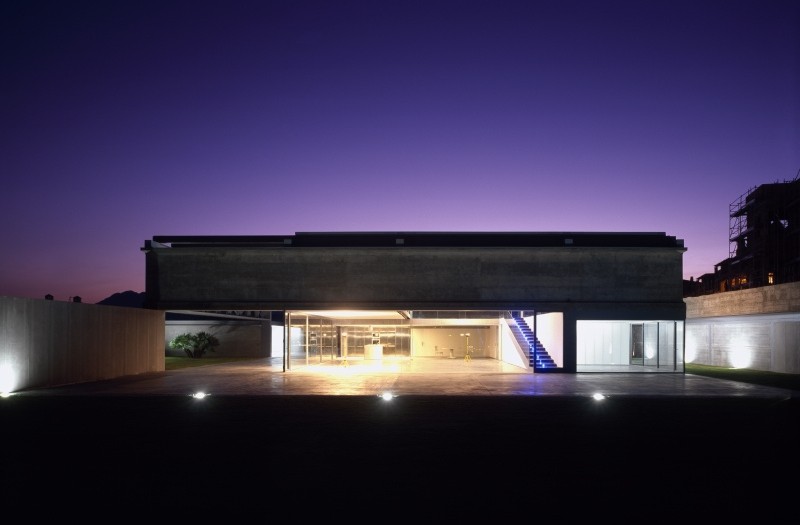
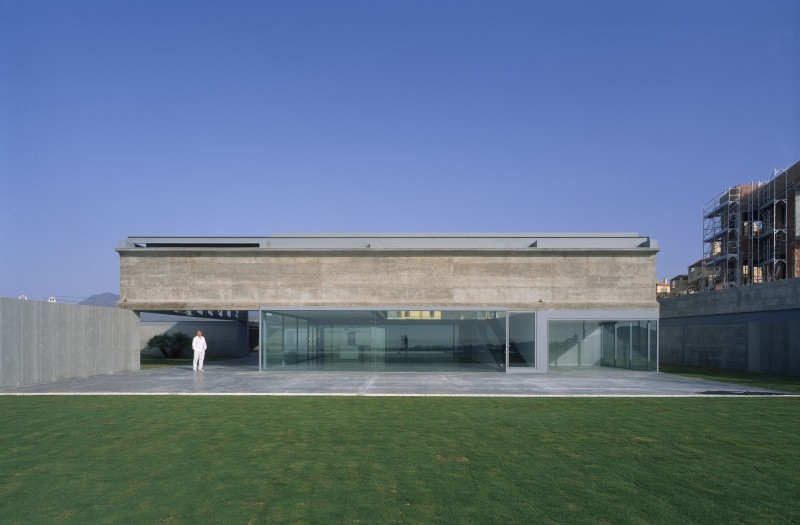
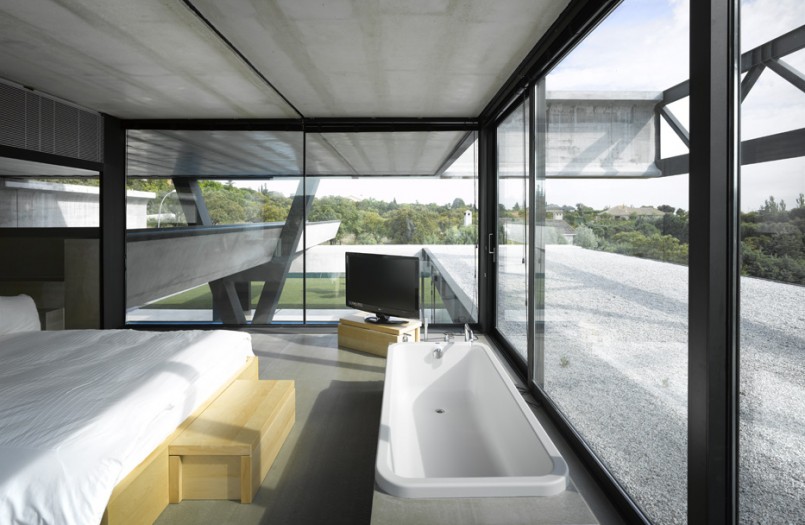
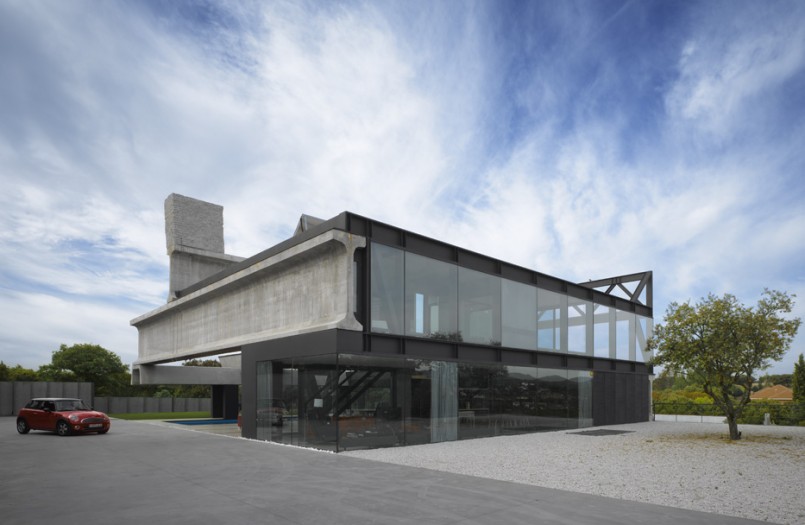
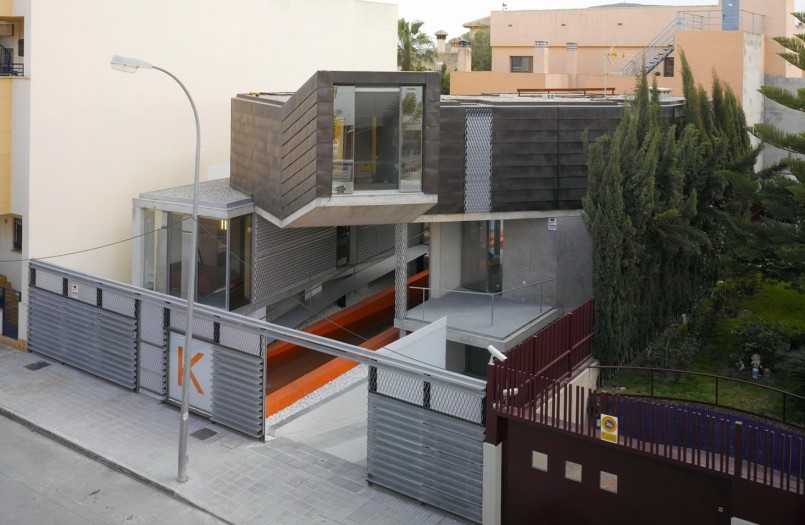
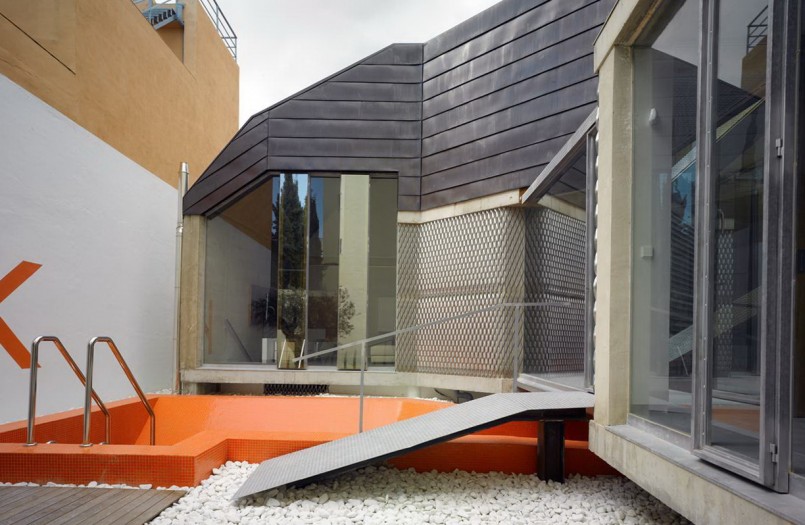
Joaquín Alvado Bañón has recently completed the Pool House, a project that research the relation between architecture and water, in Orihuela, near Alicante, Spain. It is a rethinking, in a sustainable way of life, to transform the way of promoting the east side of Spain.

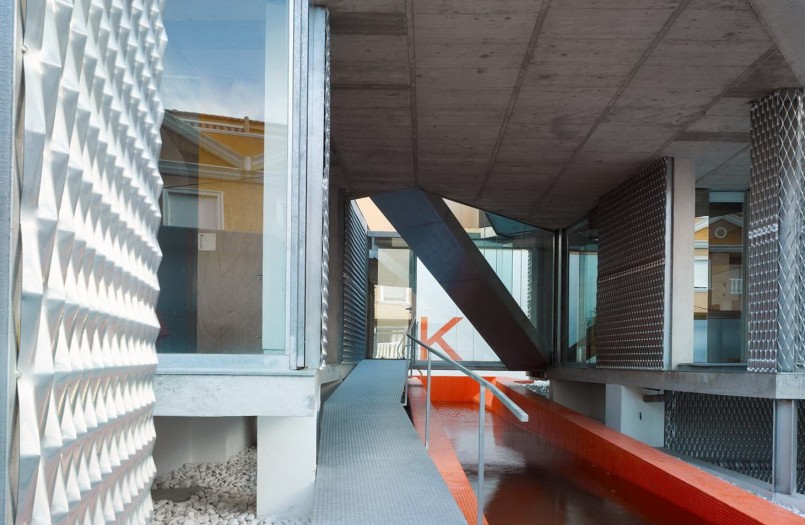
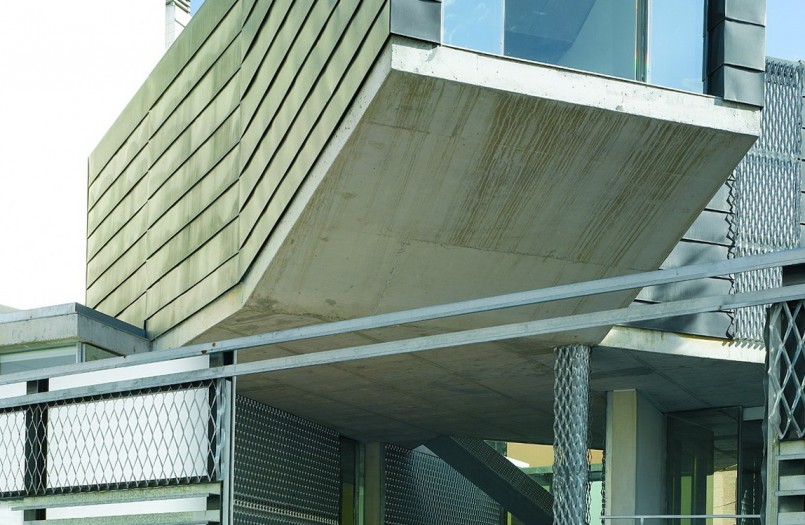
Architecture twists and turns seeking nature, it looks towards the mountains of Orihuela, and it pokes out above its limitations. It is difficult to differentiate its limits, it is a city but also a landscape, it is a private space but at the same time it takes over a public space of the street. The built parts are reflected and fragmented through the use of reflex glass in the steel carpentries.

Three personalities and one environment formally, these are three independent volumes fused into one project. Each volume has its own personality and privacy. The meeting points between the parts are made by horizontal and vertical stairs, a “Y” bridge and double heights favoring expected and unexpected relationships. Semi-private and private places for meeting are intertwined as in life itself.
Pool House article
Architect Joaquin Alvado Banon

Martemar House

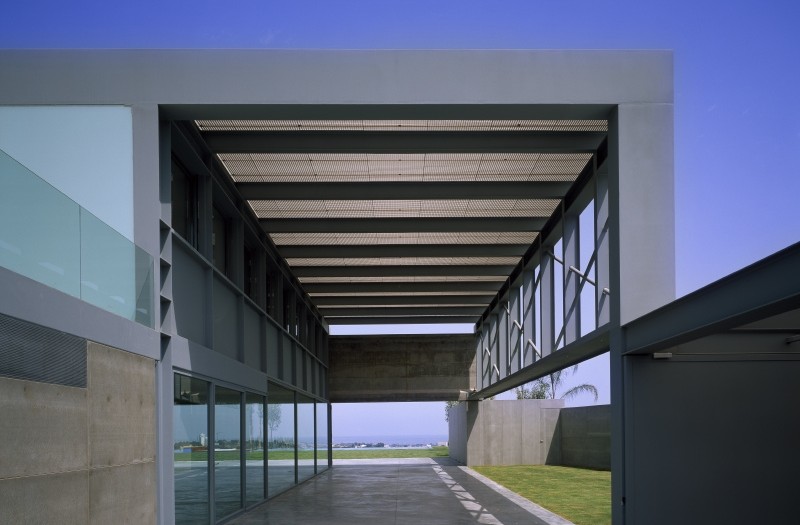
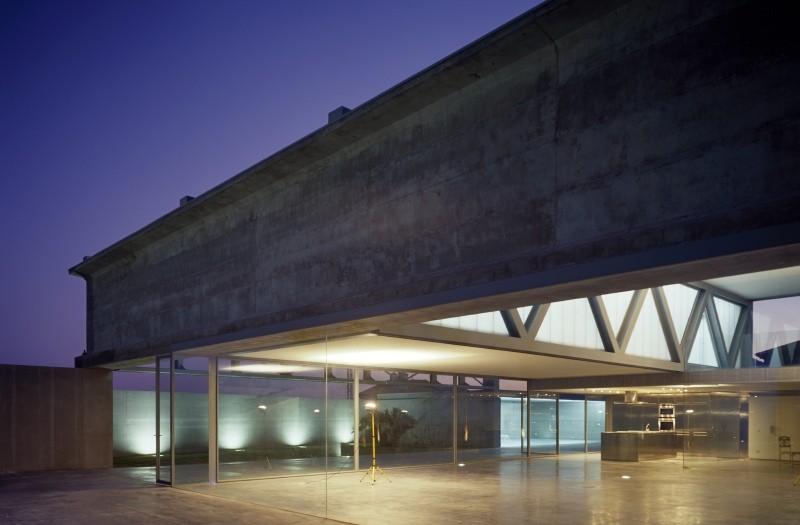
The Martemar House appears on the site like a singular architectonic object, like a stranger outside the typical architectural style of the area, understanding every scale of the context. Taking advantage of the opportunities but ignoring pre-established trends.
The house stretches on two allotments some meters above sea level, from where distant landscapes can be viewed, profiting therefore from exceptional panoramic views of the sea and the mountains.
The structural system of the house consists of two main portal frames: one in concrete formed by a beam 2.75 m. high which makes up the garden facade, and the other a steel frame overlooking the entrance. The two frames support five steel trusses, each of them with a different aesthetic and structural vocation. These five linear structural elements organize and delimit three functional strips, which establish relational sequences between them in a play of solids and voids, physical relations and visual connections, intercommunications between interior and exterior spaces.
The structure remains visible, exposed and provides the architecture with its image and its form.

Ensamble Studio - Martemar House

747 Wing House

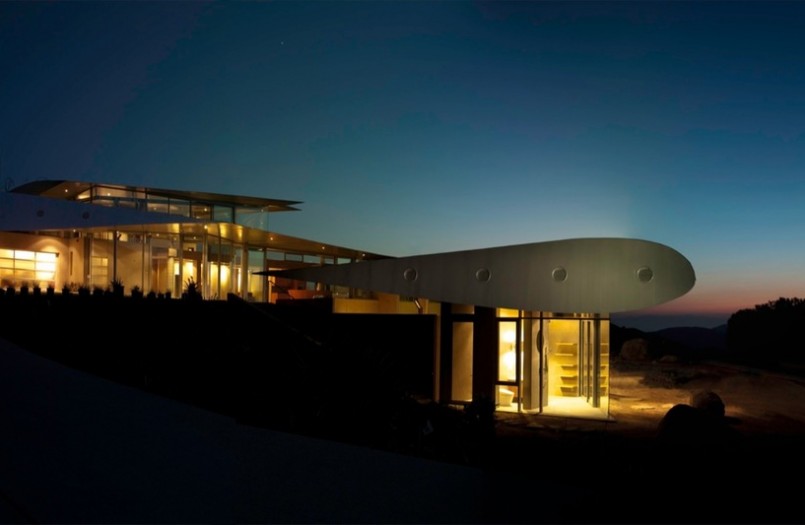
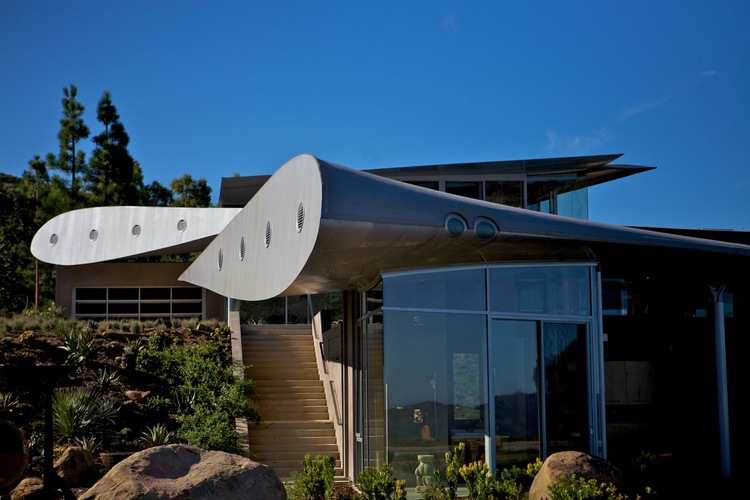
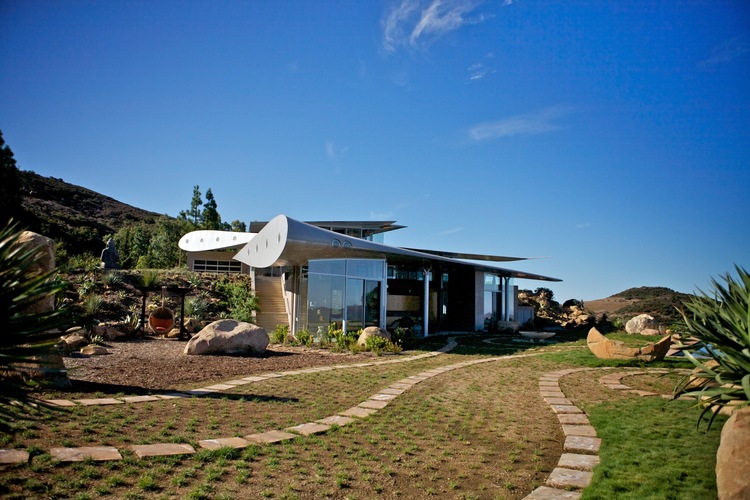
This project exists on a 55-acre property in the remote hills of Malibu with unique topography and panoramic views looking out to a nearby mountain range, a valley, and the Pacific Ocean with islands in the distance. In searching for inspiration, I imagined a roof structure that would allow for a un-obstructed view of the mountain range and distant views. The client, a woman, requested curvilinear/feminine shapes for the building. The progenitor of the building’s form was envisioned as a floating curved roof. It soon became apparent, that in fact, an airplane wing itself could work. In researching airplane wings and superimposing different airplane wing types on the site to scale, the wing of a 747, at over 2,500 sq. ft., became an ideal configuration to maximize the views and provide a self supporting roof with minimal additional structural support needed.

David Hertz - 747 Wing House

David Hertz interview

Hemeroscopium House

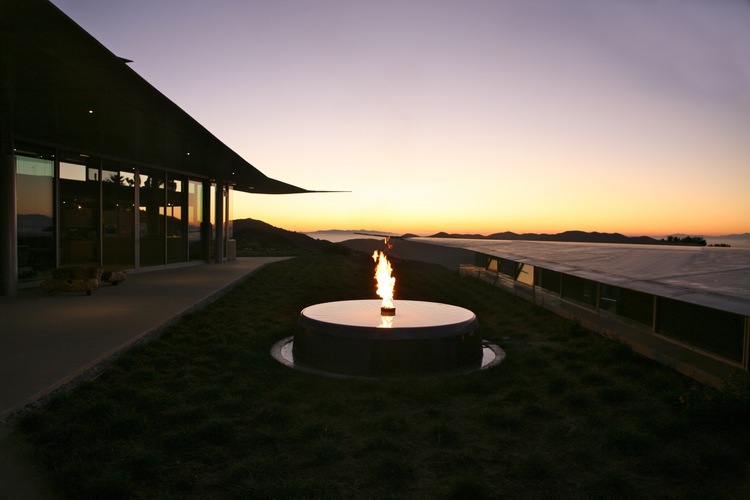
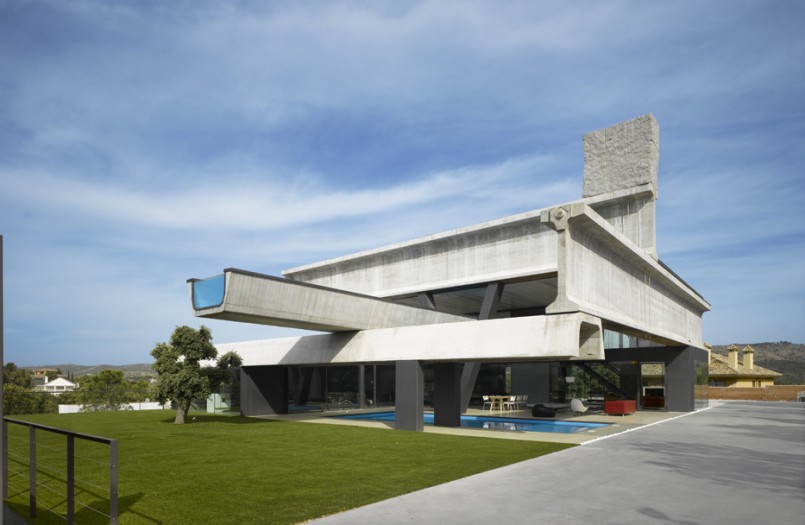
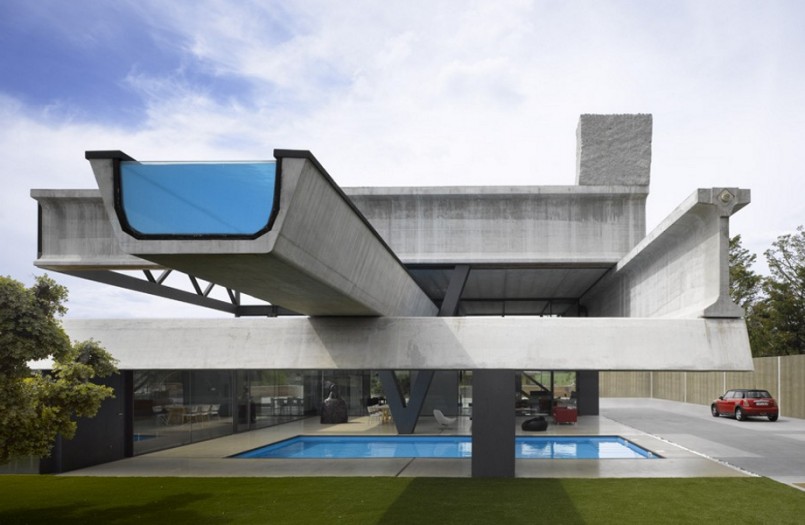
For the Greek, Hemeroscopium is the place where the sun sets. An allusion to a place that exists only in our mind, in our senses, that is ever-changing and mutable, but is nonetheless real. It is delimited by the references of the horizon, by the physical limits, defined by light, and it happens in time.

Hemeroscopium house traps, a domestic space, and a distant horizon. And it does so playing a game with structures placed in an apparently unstable balance, that enclose the living spaces allowing the vision to escape. Heavy structures and big actions are disposed in a way to provoke gravity to move the space. And this way the place is defined. The order in which these structures are piled up generates a helix that sets out from a stable support, the mother beam, and develops upwards in a sequence of elements that become lighter as the structure grows, closing on a point that culminates the system of equilibrium. Seven elements in total. The design of their joints respond to their constructive nature, to their forces; and their stresses express the structural condition they have. By the way this structure is set, the house becomes aerial, light, transparent, and the space kept inside flows with life. The apparent simplicity of the structure’s joints required in fact the development of complex calculations, due to the reinforcement, and the pre-tension and post-tension of the steel rods that sew the web of the beams.


Ensamble Studio - Hemeroscopium House

New York Times article

Big Dig House

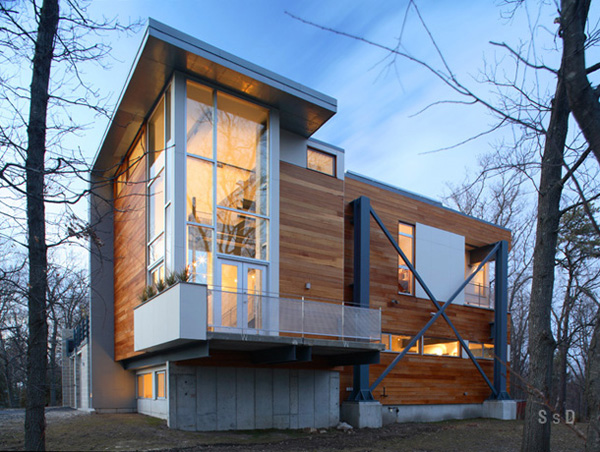
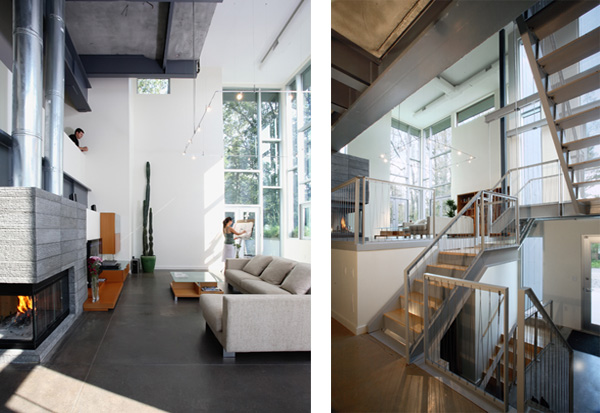
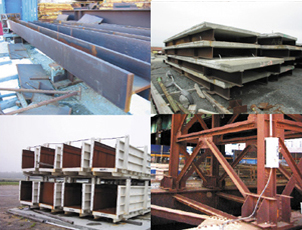
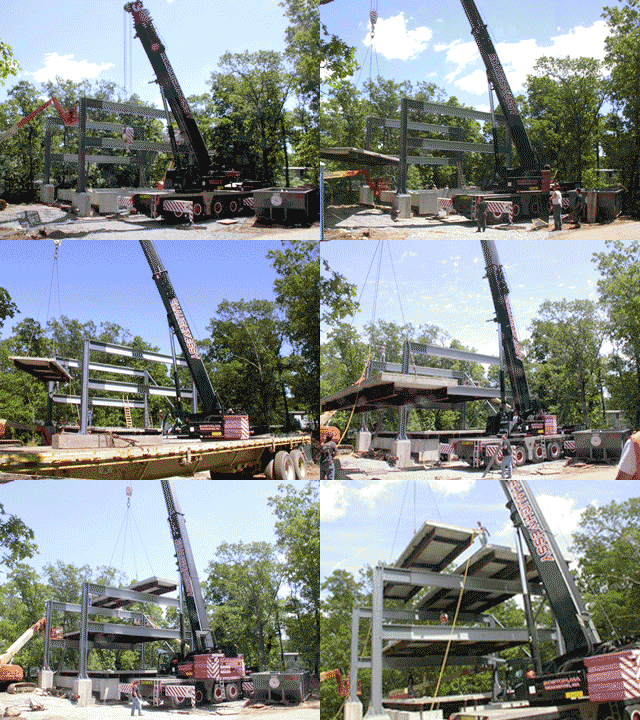
As a prototype building that demonstrates how infrastructural refuse can be salvaged and reused, the structural system for this house is comprised of steel and concrete discarded from Boston’s Big Dig utilizing over 600,000 lbs of salvaged materials from elevated portions of the dismantled I-93 highway. Planning the reassembly of the materials in as if it were a pre-fab system, subtle spatial arrangements are created. These materials however are capable of carrying much higher loads than standard structure, easily allowing the integration of large scale roof gardens. Most importantly, the project demonstrates an untapped potential for the public realm: with strategic front-end planning, much needed community programs including schools, libraries, and housing could be constructed whenever infrastructure is deconstructed, saving valuable resources, embodied energy, and taxpayer dollars.


Link to SSD - Big Dig House - Architect

Weidlinger Associates - Architect

Video from CNN

USA Today - Article