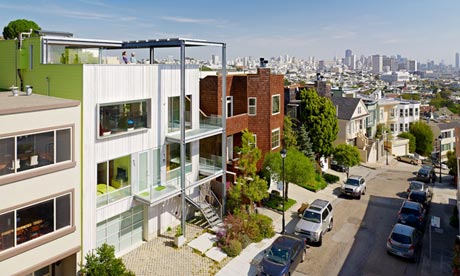
US. This housing unit in San Francisco’s Bay Area includes photovoltaics, a solar domestic hot water system and zoned radiant heating. “There is a huge section of the Bay Area population who make it a priority to live in a thoughtful and sustainable house,” says architect Craig Steely. “The construction cost came in at twice what [the owners] had budgeted. Instead of cutting back, they chose to add more sustainable features to their lower unit, increasing its value so they could ultimately sell the lower unit and recoup their construction costs.”
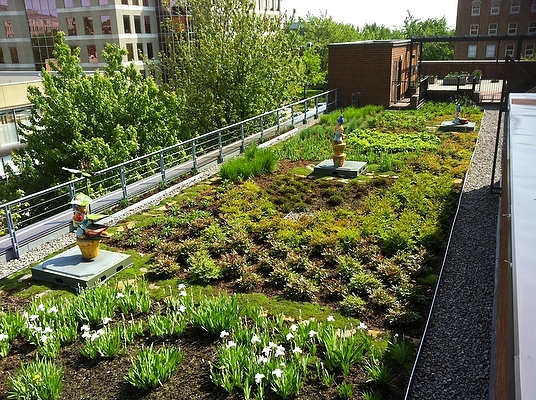
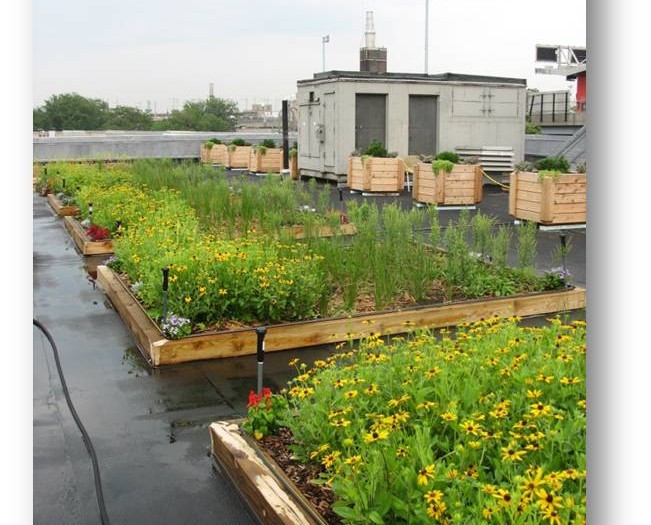
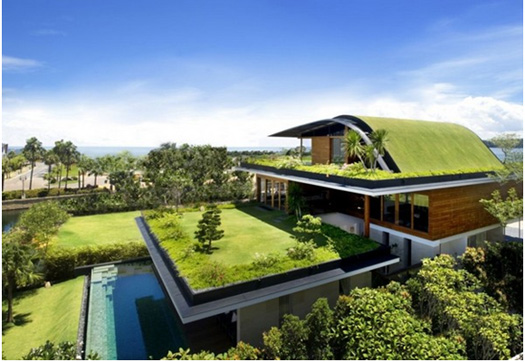


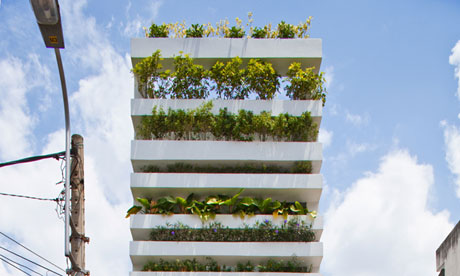
Green roof system is an extension of the existing roof which involves a high quality water proofing and root repellant system, a drainage system, filter cloth, a lightweight growing medium and plants.
Green roof systems may be modular, with drainage layers, filter cloth, growing media and plants already prepared in movable, often interlocking grids, or loose laid/ built-up where each component of the system may be installed separately. Green roof development involves the creation of “contained” green space on top of a human-made structure. This green space could be below, at or above grade, but in all cases the plants are not planted in the “ground’. Green roofs can provide a wide range of public and private benefits.
In North America, the benefits of green roof technologies are poorly understood and the market remains immature, despite the efforts of several industry leaders. In Europe however, these technologies have become very well established. This has been the direct result of government legislative and financial support, at both the state and municipal level. Such support recognizes the many tangible and intangible public benefits of green roofs. This support has led to the creation of a vibrant, multi-million dollar market for green roof products and services in Germany, France, Austria and Switzerland among others. In Germany for instance, the industry made 700 million DM in sales in 1997, up from 500 million DM in sales in 1994. The industry continues to experience growth with with 13.5 million square metres of green roofs constructed in 2001, up from 9 million square metres built in 1994. In North America, thanks to education and policy support the green roof industry continues to grow rapidly.
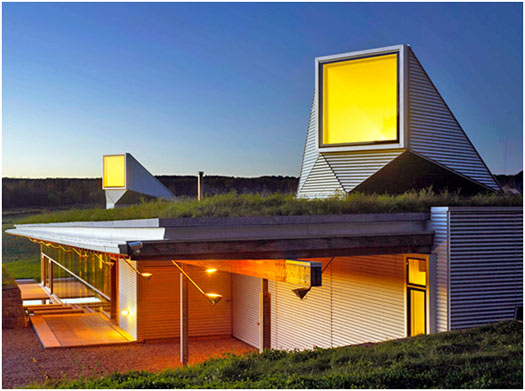

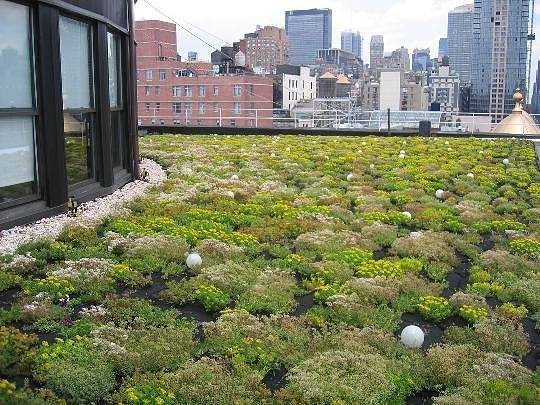

High atop some of the urban jungle’s tallest, widest buildings, city residents are laying down soil and planting native vegetation. Modern green roofs, which are typically flat (unlike traditional Scandinavian sod roofs), help to lower heating and cooling costs while reducing air and water pollution. Leaders worldwide are recognizing the benefits of green roofing, and are slowly turning the aerial view of their cities from gray to green.
In Germany, for example, nearly 10 percent of all rooftops are green; in Switzerland, Toronto and Tokyo, laws require certain-sized roofs to be green, and in Chicago, Illinois, a 2005 city grant program helped to finance the planning and installation of more than 200 green roofs.
Read the Article
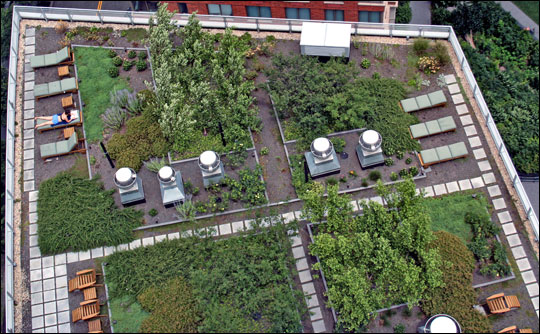
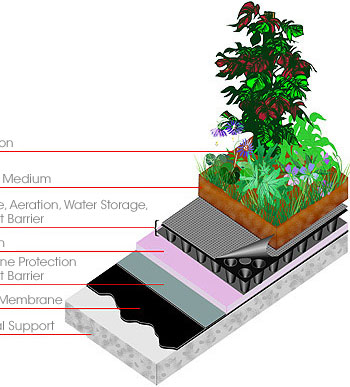
Advantages of green roofs
Research from around the world indicates that green roofs reduce annual run-off from roofs by at least 50%, and more usually by 60-70% – contributing to urban drainage and flood alleviation schemes. Moreover, the rate of release following heavy rainfall is slowed, reducing the problems associated with storm surges.
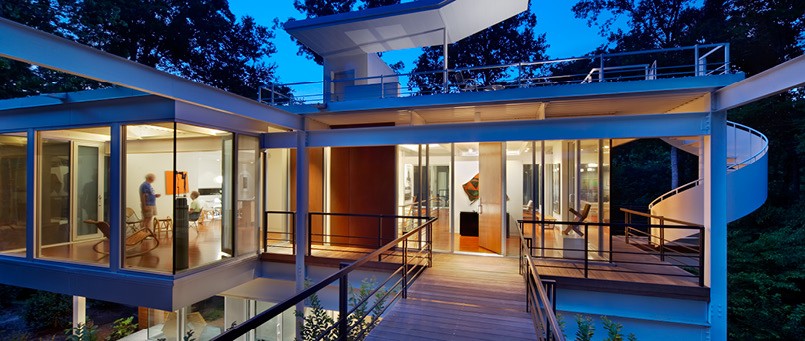
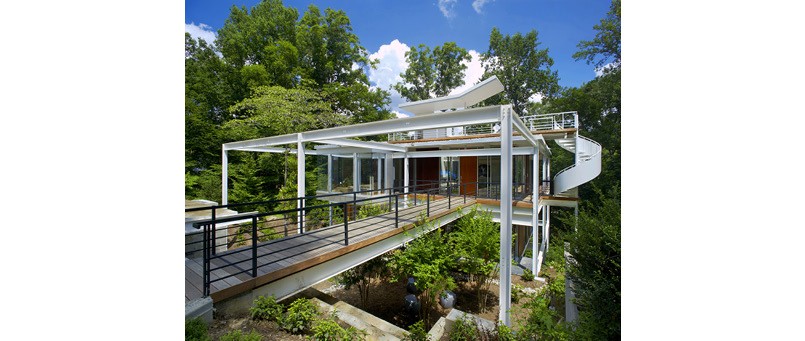
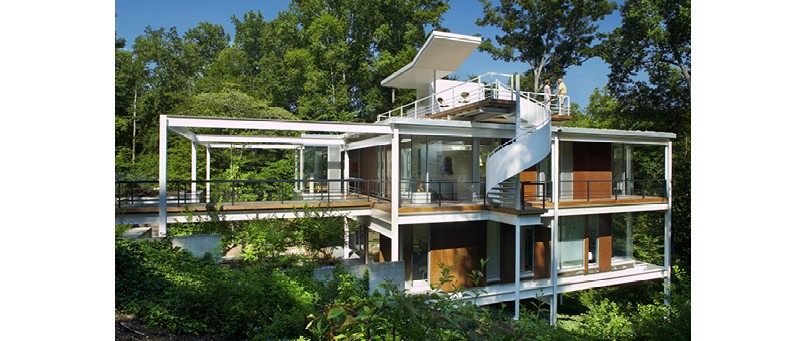
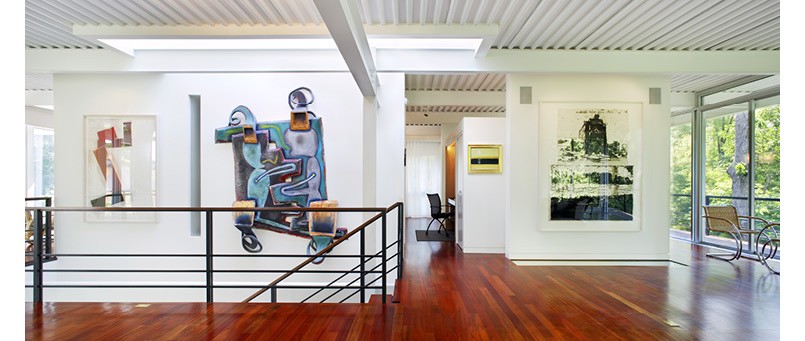
Built upon the steel frame of a previous home and a love of mid-century modern art and architecture, the Chiles Residence provides both open perches and quiet retreats on its wooded hill site. Using rusted steel panels and white painted steep beams, along with wood, aluminum and glass, the house frames both art and views of the landscape. The roof garden combines elements that serve, both in form and reason, to counter the clearly defined steel structure and at the same time giving feelings of height and expansion.
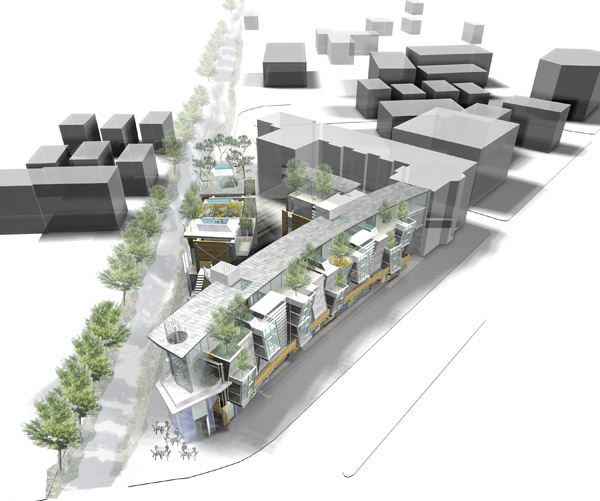
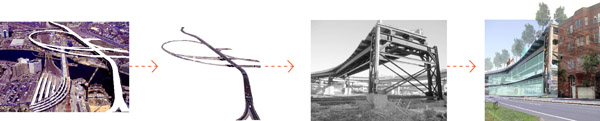
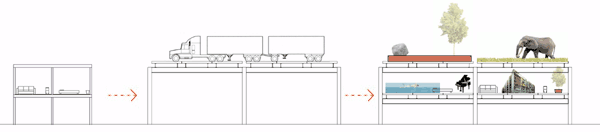
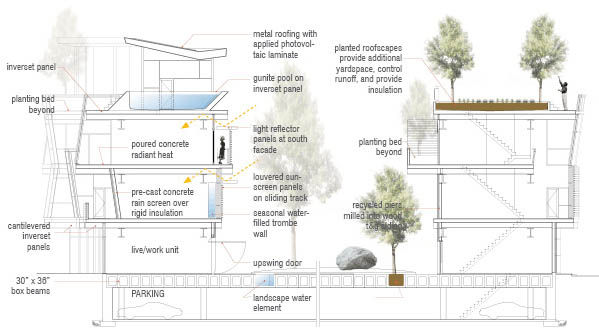
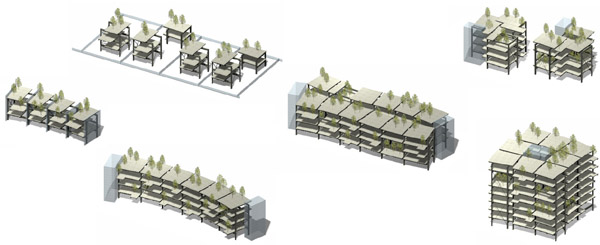
Most are familiar with Boston’s ongoing “Big Dig.” Few, however, give thought to the massive amount of waste that accompanies construction on this scale, namely the dismantling of the existing and temporary roadways. The Big Dig Building proposes to relocate and recycle these infrastructural materials as building components, adapting them to uses ranging from structural members to cladding. Furthermore, as these reused materials can withstand much higher loads than conventional building elements, the social ramifications of “heavy” in relation to “dwelling” can produce new and innovative results.
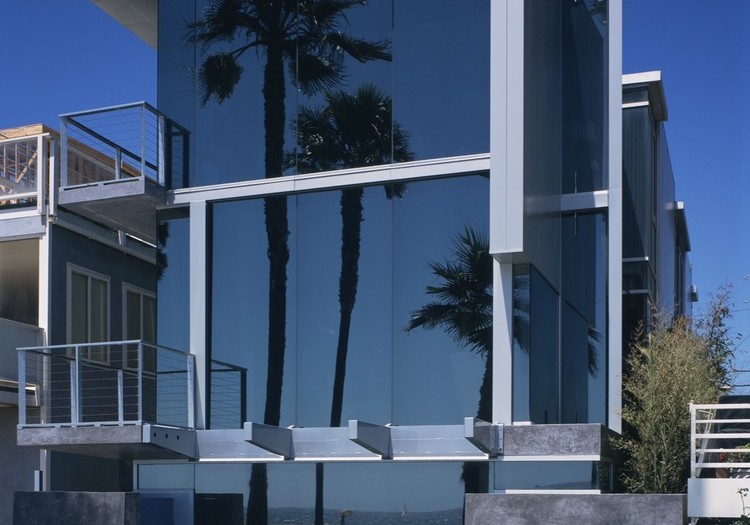
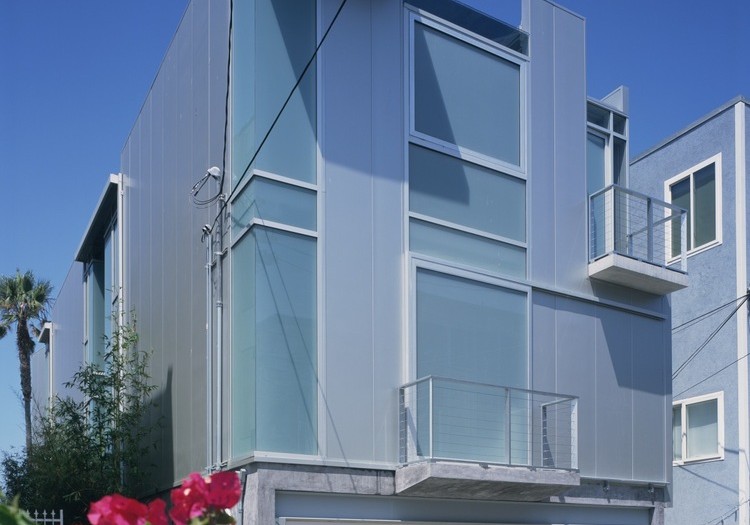
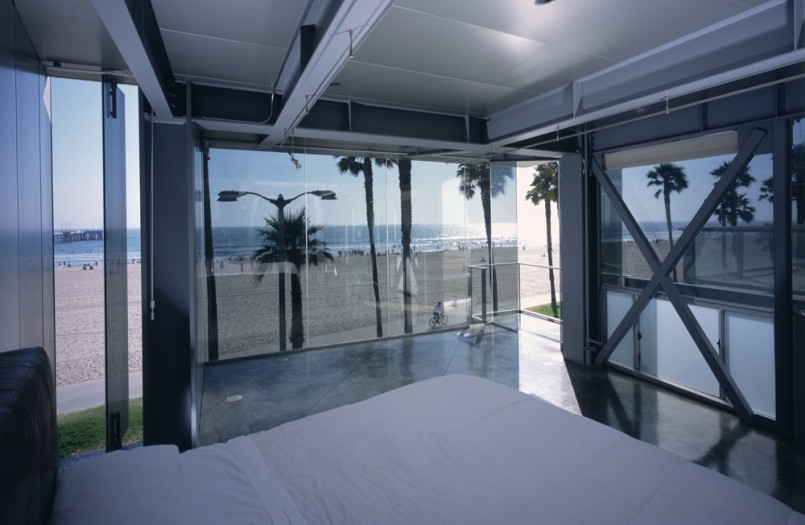
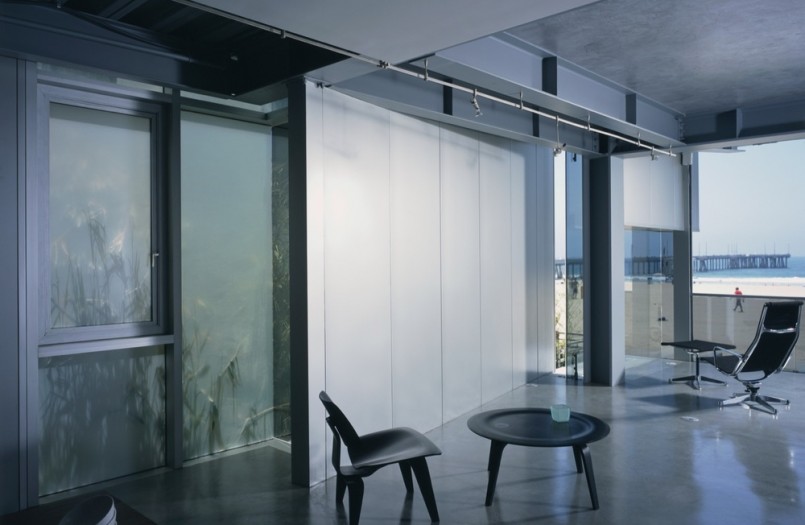
The house is located on 28 x 89 foot lot on the Ocean Front Walk in Venice Beach. Due to the lots’ long and narrow dimensions, the design intent is to create a series of angled walls and reveals in the side elevations in order to provide for view corridors down the side yards to the ocean. The space between the tapered walls is used for pivot windows, which allow for the modulation of the natural prevailing breezes through the house.
The narrow structure afforded the opportunity to create a clear span structural system, eliminating the need for any interior load bearing walls. By omitting interior walls, natural ventilation air paths can flow from the Ocean Front through the entire interior and out the Leeward side of the building. To create the clear span spaces, a steel building system of wide flange steel columns and beams, diagonal brace frames with composite steel and concrete decking and concrete slabs are used to create a rigid diaphragm so that no shear walls are required.
The building’s skin is made of pre-fabricated panels, typically used for walk in refrigeration buildings. The panels are manufactured out of 6-inch thick foam skinned with thin sheet aluminum that is painted with a Kynar paint finish. The 6-inch thick panels are 30 inches wide x 30 feet tall and weigh less than a hundred pounds each. Two men simply install each panel, which orient vertically with an interlocking joint and are screwed to the closure plate at the floors. The panels are designed with a dull aluminum finish creating a surface that has a subtle reflectivity of the changing colors of the sky and sunsets.
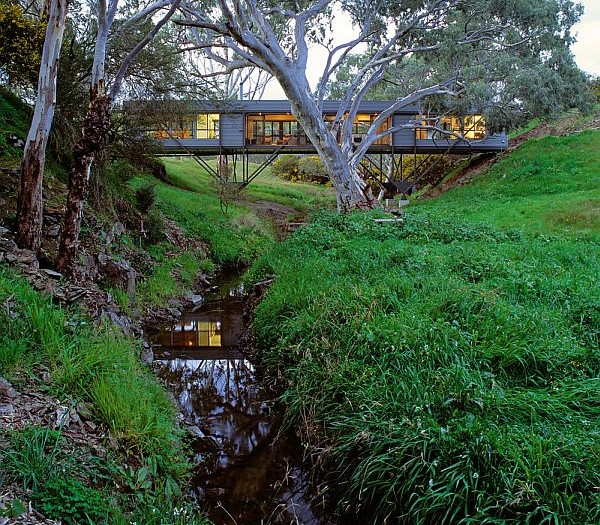
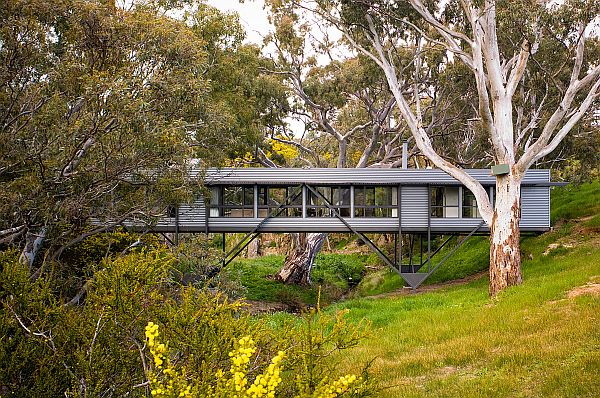
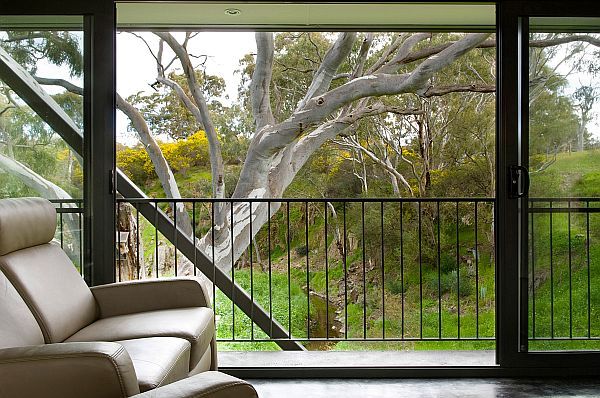
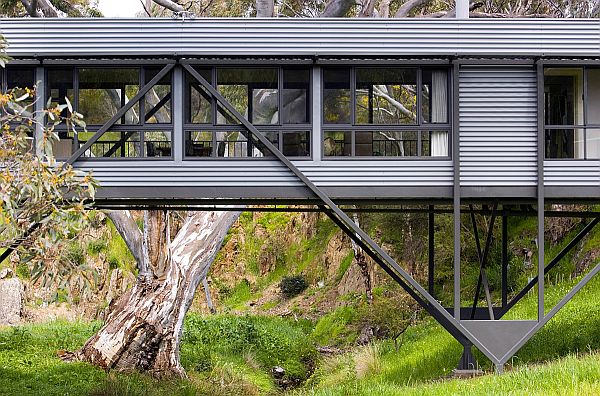
Bridge House cautiously. It is made of two rolls of steel with concrete floors and steel decking, has a roof made from plantation pipe and fitted with transparent glass walls. Another example of narrow houses, is certain to bring out feelings of entry Worth $ 175,000, Bridge House is situated in one hour drive from Adelaide. The bad guys from Max Pritchard Architect wants to bring out the adventurer in you. Apparently, people think nothing is more challenging than living in a bridge “” surrounded by lush green scenery
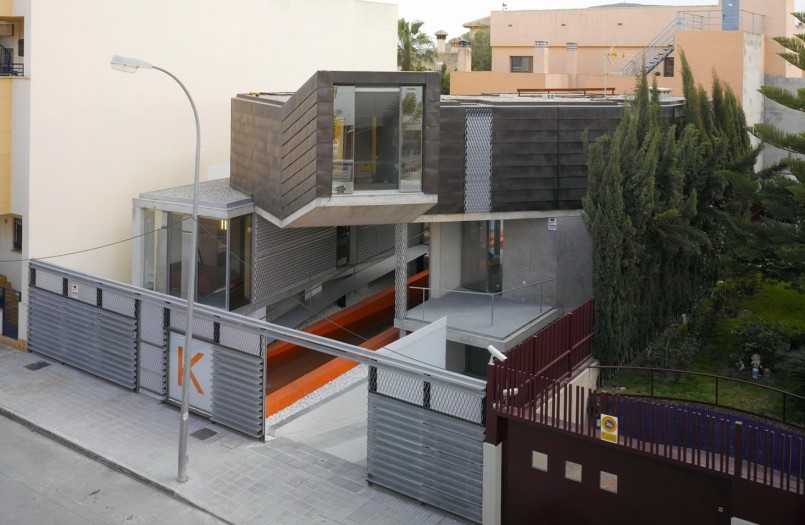
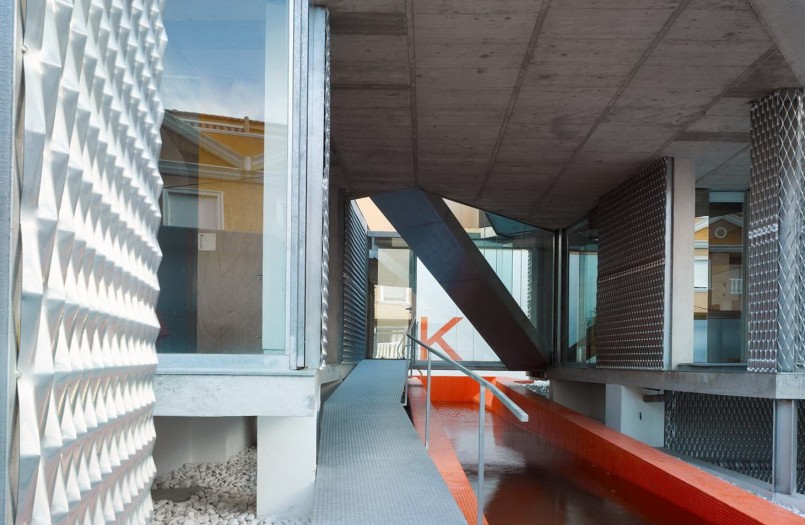
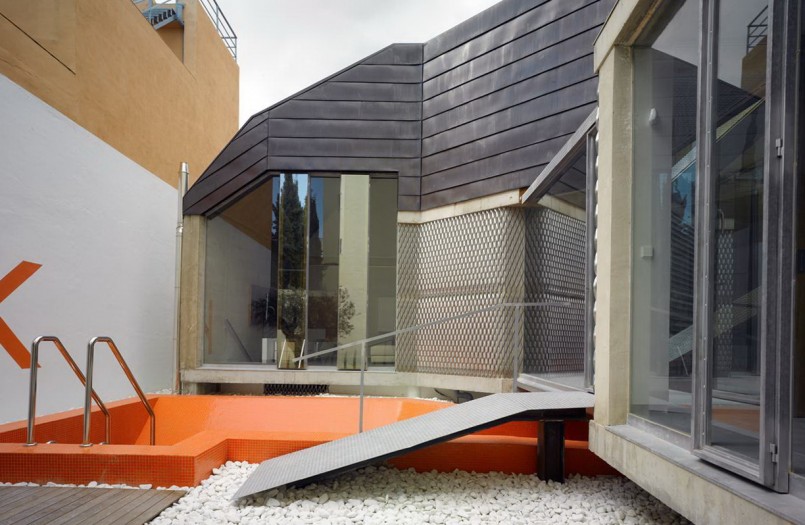
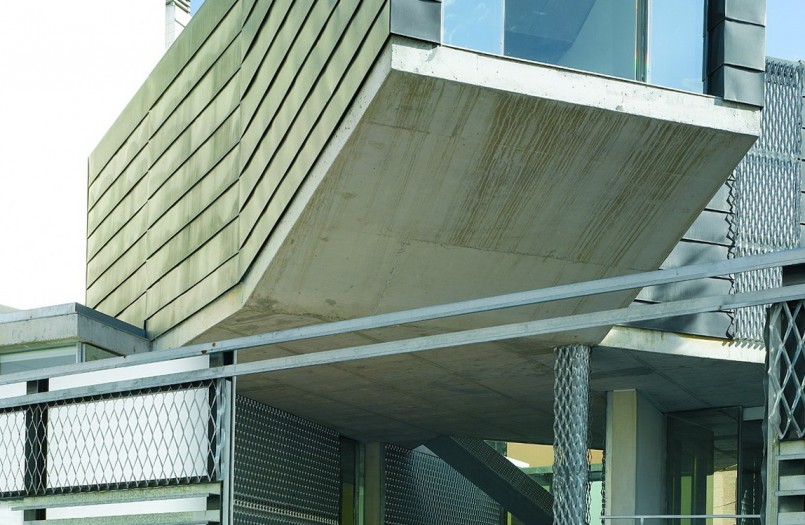
Joaquín Alvado Bañón has recently completed the Pool House, a project that research the relation between architecture and water, in Orihuela, near Alicante, Spain. It is a rethinking, in a sustainable way of life, to transform the way of promoting the east side of Spain.
Architecture twists and turns seeking nature, it looks towards the mountains of Orihuela, and it pokes out above its limitations. It is difficult to differentiate its limits, it is a city but also a landscape, it is a private space but at the same time it takes over a public space of the street. The built parts are reflected and fragmented through the use of reflex glass in the steel carpentries.
Three personalities and one environment formally, these are three independent volumes fused into one project. Each volume has its own personality and privacy. The meeting points between the parts are made by horizontal and vertical stairs, a “Y” bridge and double heights favoring expected and unexpected relationships. Semi-private and private places for meeting are intertwined as in life itself.
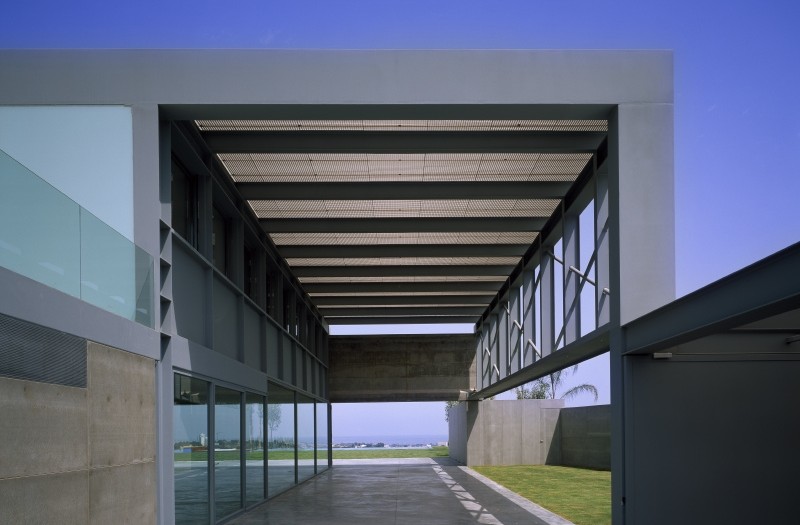
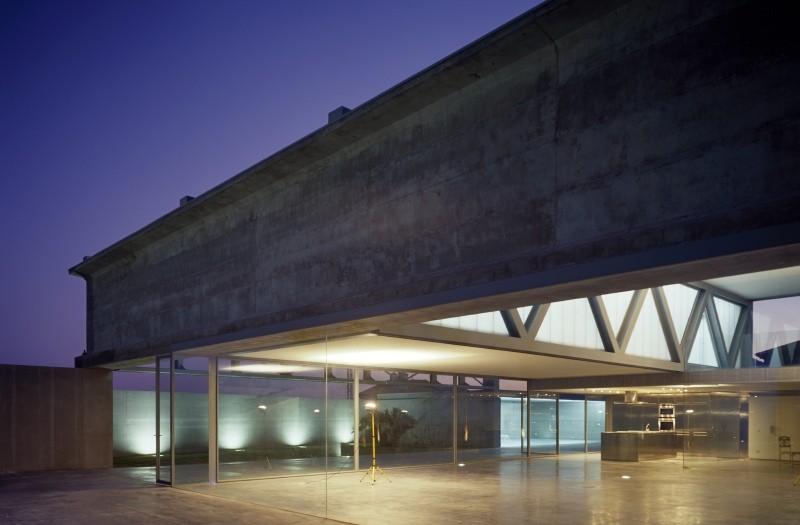
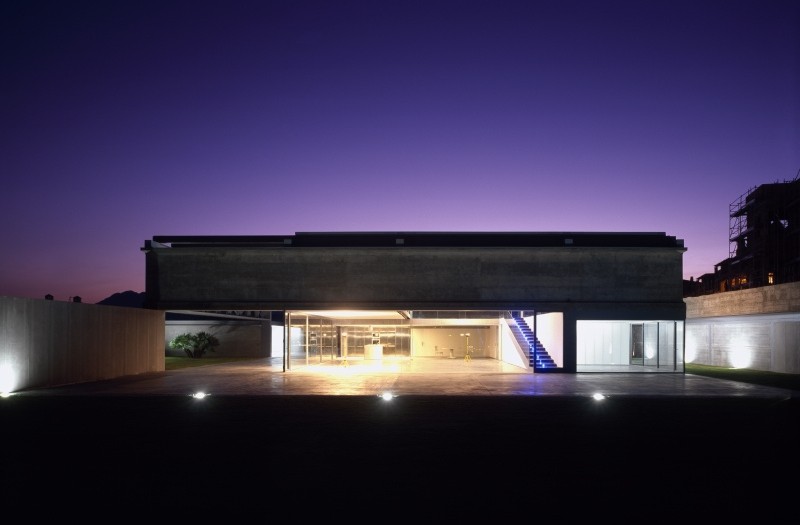
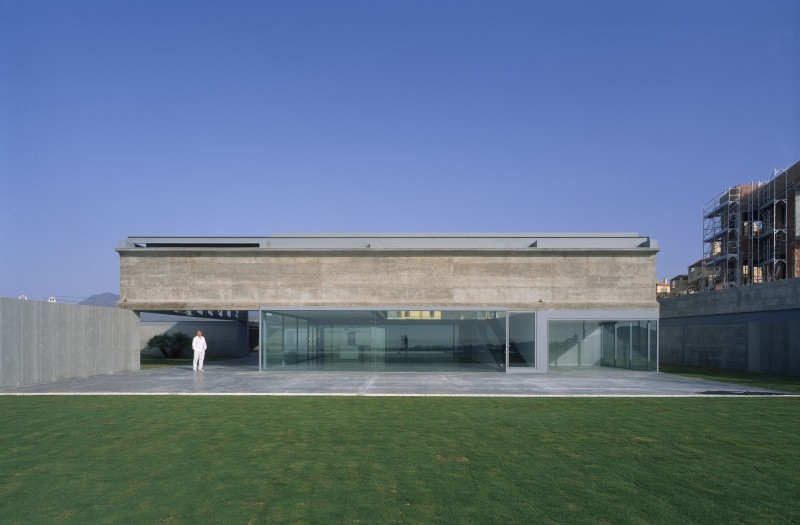
The Martemar House appears on the site like a singular architectonic object, like a stranger outside the typical architectural style of the area, understanding every scale of the context. Taking advantage of the opportunities but ignoring pre-established trends.
The house stretches on two allotments some meters above sea level, from where distant landscapes can be viewed, profiting therefore from exceptional panoramic views of the sea and the mountains.
The structural system of the house consists of two main portal frames: one in concrete formed by a beam 2.75 m. high which makes up the garden facade, and the other a steel frame overlooking the entrance. The two frames support five steel trusses, each of them with a different aesthetic and structural vocation. These five linear structural elements organize and delimit three functional strips, which establish relational sequences between them in a play of solids and voids, physical relations and visual connections, intercommunications between interior and exterior spaces.
The structure remains visible, exposed and provides the architecture with its image and its form.
Ensamble Studio - Martemar House
Recent Comments